



Want to protect your membership revenue during a recession? You gotta look beyond new signups.
I’ve worked with plenty of membership businesses over the years. I’ve learned that recurring revenue isn’t always as predictable as it looks. When it’s a recession, members can cancel at any time while they’re reviewing their monthly expenses and deciding what they can live without.
But here’s the thing – you don’t always need more members to protect your revenue. Sometimes, you need to do a better job of helping the members you already have get value from your membership.
So, read on for 10 strategies to recession-proof your membership site, improve member retention, and protect your recurring revenue.
TL;DR: Recession-proof your membership site by protecting cash flow, diversifying revenue, offering flexible pricing, and reducing dependence on a single marketing channel. Plus, you must also focus on member retention, deliver consistent value, and track key financial metrics to protect recurring revenue during economic uncertainty.
Why a Membership Business Can Struggle Even With Recurring Revenue

Recurring revenue is one of the biggest advantages of running a membership business. You know exactly:
- How much you active members pay
- When their subscription renews
- And, roughly how much income to expect each month
But recurring revenue doesn’t mean guaranteed revenue.
When your country or global economy takes a hit, your members start looking more closely at their expenses. They might cancel a membership they rarely use, downgrade to a cheaper plan or put their subscription on hold until their finances improve and things work out.
And here’s where things start getting messy. Even if you’re bringing in new members, you could still lose revenue if existing members leave faster than you can replace them.
For instance, let’s say you have 500 members paying $30 per month. That’s $15,000 in monthly recurring revenue.
Now, imagine 10% of those members cancel. You’ve lost 50 members and $1,500 in monthly revenue. Thus, if you want to maintain your original revenue, you’ll need to replace those members or find another way to make up the difference.
That’s exactly why a recession-proof membership site needs more than a steady stream of new signups. You need a plan for protecting your existing revenue, managing expenses and giving members very good reasons to stay.
The good news? You don’t have to wait for a recession to start making these changes.
Before You Make Changes, Find Out What’s Putting Members Off

What I saw most membership businesses do is – panic and lower their membership plan price. Don’t do that (yet).
Because any country’s economy won’t stay lower forever. One day or another, things are going to get back on track (Economic history and data is the proof). Thus, before you change your pricing, try introducing new membership plans or spend more money on marketing. Take a closer look at what’s happening inside your business.
After all, you don’t want to cut a valuable service to save money only to discover that it’s the very thing keeping your members subscribed!
According to the data from Recurly’s 2026 State of Subscriptions report, 52% of consumers canceled at least one subscription in the past year because they weren’t using it.
That’s a useful reminder: sometimes, the problem isn’t the price. It’s that members don’t feel they’re getting enough out of what they’re already paying for.
Once you understand where your membership business is losing value, you can make changes that address the actual problem instead of guessing. Now, without any further ado, let’s look at the 10 time-tested membership strategies to keep your business recession proof.
10 Ways to Make Your Membership Business Recession-Proof
You don’t need to overhaul your complete membership business overnight. The goal is to build a membership subscription business that can handle lower sales, changing customer budgets, and unexpected expenses without compromising the value you deliver.
So here are 10 strategies to help you do exactly that.
1. Calculate How Many Members You Need to Break Even

Before you can protect your membership revenue, you need to know how much revenue your business actually needs to survive.
It’s easy to focus on your total number of members and monthly/yearly recurring revenue. But those numbers don’t tell you whether your membership business is profitable.
Your hosting bills, software subscriptions, payment processing fees, contractors, advertising and other operating expenses all take a cut.
Thus, start by calculating your break-even point: the number of paying members you need to cover your costs.
Let’s say your membership site charges $40 per month. And after payment processing and other per-member costs, you keep $36 from each subscription alongside your fixed monthly operating expenses of total $3,600
So, in simple words, this means you’ll need at least 100 paying members to cover those expenses.
| Monthly business figures | Amount |
| Membership price | $40 |
| Variable cost per member | $4 |
| Contribution per member | $36 |
| Fixed monthly expenses | $3,600 |
| Break-even membership count | 100 members |
Here’s how you can calculate your break-even point…
Break-even members = fixed monthly costs ÷ (membership price − variable cost per member), rounded up
Now, suppose you have 150 paying members. You’re operating above your break-even point, which gives you some breathing room if cancellations increase.
But if you have 105 members, losing just a handful of subscribers could put you below that threshold.
Here’s what I’d do: First off, calculate your break-even point using your actual costs. Later, work out how much revenue you’d lose if 5%, 10% or 15% of your members canceled.
2. Build a Cash Reserve Before You Actually Need It

Imagine your membership revenue drops next month. Would you have enough cash to cover your bills without immediately slashing your marketing budget or making changes that hurt the member experience?
If the answer is no, it’s time to work on your cash reserve.
A cash reserve gives your membership business room to handle unexpected expenses, slower sales and temporary dips in renewals. Apart from this, it gives you time to make (Well-thought)decisions.
First things first, start by calculating your essential monthly business expenses. Include the costs you need to keep your membership running such as hosting, critical software, payment processing, customer support and essential contractors.
If you run a small or growing membership business, you might have employees as well. Keep that in account, and then, choose a reserve target based on your expenses and how predictable your income is.
For instance, if your essential operating expenses are $4,000 per month, a reserve covering three months of expenses would be $12,000. A six-month reserve would be $24,000.
Now your ideal target depends on your business. A membership site with stable renewals and low overhead will need a different cushion from one that relies heavily on seasonal sales or paid advertising.
Further, you don’t have to build the entire reserve at once, either. Simply set aside a fixed amount or percentage of monthly profit and increase your contributions as your finances allow.
One important distinction: your cash reserve isn’t the same as your monthly profit or membership revenue. It’s money you’ve deliberately set aside to help your business weather a difficult period.
And when things get tough, you’ll be glad you have it.
3. Stop Depending on a Single Source of Membership Revenue
If your membership site depends only on one membership plan, you’re putting a lot of pressure on a single source of income.
What happens if new signups slow down? What if your audience starts spending less? Or what if a large group of members decides not to renew? Well, anything is possible when recessions start hitting, taking every business down, one by one, or all at once.
If that happens, you will find yourself scrambling to replace revenue that previously felt predictable. And that’s exactly why diversifying your membership business revenue is worth considering.
Never ever rely on a single source of income.
However, remember, we’re not adding more products just for the sake of numbers; It’s to create more ways to earn revenue that make sense for your audience and don’t undermine your core membership.
For example, a business coaching membership could introduce:
- Standalone workshops for people who need help with one particular challenge but aren’t ready for a recurring subscription
- Downloadable resources such as templates, checklists, workbooks or industry-specific tools that customers can buy individually
- Specialist training – a paid masterclass or short course that goes deeper into a topic members already care about
- Recommend tools your audience genuinely needs and earn commissions when they purchase through your links
Notice how none of these options needs you to replace your existing membership. They give customers more options to buy from you.
The key is to pick and create membership plans and offers that complement what you already do. If you’re running a membership for freelance designers, for instance, selling a client proposal template makes sense. Launching an unrelated product just because it might generate extra income doesn’t.
Also, keep an eye on the numbers. A new revenue stream should generate enough income to justify its development, maintenance and marketing costs.
You want to lower your dependence on one source of revenue, not create five new expenses in the process.
4. Give Members More Ways to Pay That Match Their Needs
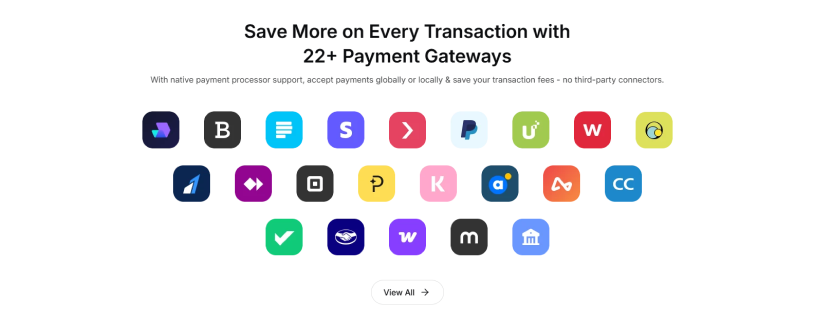
When money gets tight, even members who love your content will struggle to justify a recurring payment.
But that doesn’t always necessarily mean they’ve stopped valuing your membership. They might simply need a payment arrangement that works better for their current budget.
And for that reason, your membership pricing strategy matters.
Look at how members can pay and whether your existing options suit different budgets.
For instance, you can offer monthly, quarterly or yearly billing. Monthly billing gives members a smaller upfront commitment. The quarterly billing cycle is the perfect middle ground. Meanwhile, yearly billing offers more predictable revenue and reduces the frequency of renewal decisions.
Worth mentioning, if you’re using a membership system like ARMember, creating flexible recurring plans gets much easier. You need no technical hassle or coding. ARMember lets you create unlimited membership plans with different pricing and content access rules. Best of all, it gives your members 22+ payment gateways options to pay membership fees.
You can also introduce a lower cost membership tier with a clearly defined scope of access.
Say your premium membership comes with every online course, monthly live coaching, a private community and downloadable resources. Then, a more affordable plan can have the core courses and resource library without the live coaching sessions.
Members who need to lower their expenses can choose the lower cost option for the time being without losing what they like.
Just be careful not to discount your premium plan too much. If you repeatedly offer the same plan at a lower price, members will learn to wait for the next sale rather than pay the regular rate.
The better approach is to adjust the offer, not automatically devalue the product.
On top of that, always review your membership data before making changes. If members often request more flexible billing, test payment options. If they want a cheaper plan, find which EXACT features they value most and design a smaller package around them.
And if you introduce a pause option, make sure you understand how it affects access, billing and reactivation. Because flexibility can help you retain relationships with members who would otherwise cancel but it needs to be used and applied correctly.
5. Create an Upgrade Path Instead of Relying on New Signups

Not every member joins your site ready to buy your most expensive plan. Some want to explore your content first. And others….they might need only a few basic resources before they’re ready for more personalized support.
That’s perfectly fine.
Rather than treating every new member as a one time conversion opportunity, build a clear path for members to access more value as their needs evolve.
For example, you run an online learning membership that could have three stages:
- Starter Plan
- Access to foundational courses and essential resources.
- Professional Plan
- Access to the full course library, advanced training, and specialist workshops.
- Mentorship Plan
- Everything in the professional plan, plus small-group coaching and personalized feedback.
A member might start with the starter plan, discover that your training helps them solve a real problem, and eventually upgrade to professional or mentorship.
But, don’t yet just make every upgrade pitch about getting access to more features. Explain what the additional investment helps members accomplish.
For instance, someone learning to build a freelance business might benefit from foundational lessons at first. And, once they’re ready to find clients, personalized feedback on proposals could become much more valuable than another collection of general tutorials.
That’s the upgrade opportunity.
Review how members use your existing plans, recognize what they’re likely to need next, and make the transition simple. A well-timed recommendation based on actual member activity is more useful than sending every subscriber the same upgrade offer.
6. Sell an Additional Offer That Solves a Specific Customer

There’s an important difference between diversifying your revenue and launching products simply because you want to sell more.
The first addresses a business risk. The second can leave you with extra work, additional costs and products your customers don’t actually want.
So, what I would recommend as the best membership growth strategy to make a recession proof membership site is to first identify a specific problem your audience is willing to pay to solve. Never jump straight to creating an additional offer.
Let’s say you run a membership for small business owners. Your members already have access to training on marketing, finance and operations. But some struggle to put what they’ve learned into practice.
For this, you can offer a one-time website audit, a ready-to-use marketing calendar or a focused implementation workshop.
These offers solve a more immediate problem plus complements your recurring membership.
The same principle works in other niches:
- A fitness membership could sell a personalized training plan.
- A photography membership could offer a client contract template pack.
- A language-learning membership could offer a one-time speaking assessment.
- A career development membership could sell a resume review.
The idea is to give customers a way to get help with a specific need. And here’s a useful point to remember:
A lower-cost offer doesn’t have to mean a lower-value experience. You can reduce the scope of the service plus preserve the outcome that makes it worthwhile.
Apart from that, before investing time and money into building anything, ask your members what they struggle with most. Look at support requests, survey responses and frequently discussed problems.
Those are better starting points than guessing what might sell. Then test demand with a small offer before turning it into a major product line.
7. Make Your Membership Useful for Customers Who Need to Save Time or Money
When customers start cutting expenses, they don’t stop buying everything. They just become more selective about what deserves a place in their budget.
Your membership site goal is to be inside that selective list (yet it’s not as easy as it sounds).
If your membership helps people solve a problem, save time, improve their skills, or make better decisions, show them exactly how it does that.
For instance,
- A membership for freelancers can have proposal templates that lower the time spent preparing client pitches.
- A business membership can offer budgeting spreadsheets that help owners monitor expenses.
- A learning membership could provide structured lessons that help members develop a valuable skill.
All in all, these are practical benefits members can recognize and use.
Plus, you can look for ways to make your existing content more useful without creating an entirely new product. Organize resources around common goals, create quick start guides and recommend the best lessons for specific situations.
During an economic downturn, helping members get more from their existing subscription can be just as important as giving them something new to buy.
8. Lower Your Dependence on One Marketing Channel

Let’s say most of your new members come from Google search. Your membership is growing, your content ranks well and organic traffic brings in a steady stream of signups.
Then suddenly…your rankings drop!
Or perhaps you’re relying way too much on paid advertising and acquisition costs rise just as customers become more cautious about spending.
Now what?
Well, either way, a single marketing channel can become a serious vulnerability, and so, a recession-proof membership site needs a more resilient membership growth strategy.
You don’t need to be everywhere. You need a few channels that reach the right audience and work together.
For example, a membership business can combine:
- Search focused content.
Publish useful articles that attract people looking for solutions your membership provides. - Email marketing.
Make an audience you can reach directly with relevant content, product updates and membership offers. - Member referrals.
Encourage loyal members only to recommend your site to people who could benefit from it - Strategic partnerships.
Collaborate with complementary businesses, creators or industry experts who already serve your target audience.
All in all, each channel serves a different purpose. Search content can attract people discovering your business, email can nurture existing relationships and referrals can introduce you to people who already trust the recommendation.
For this, first off, you’ve to start by identifying where your current members come from and which channels generate customers who stay subscribed. Don’t evaluate a channel purely by the number of clicks or signups it produces.
Apart from that, make sure to track acquisition costs alongside renewal rates and member lifetime value. That way you can invest in channels that support your membership site sustainable growth.
9. Use Member Feedback to Decide What to Improve, and What to Stop
When revenue becomes uncertain, it’s tempting to cut expenses wherever you can.
But cutting costs without understanding what your members value can backfire. You might by mistake remove a feature that keeps members engaged while continuing to pay for something almost nobody uses.
Thus, a better approach is to combine member feedback with actual usage data.
Start by asking members what they find most useful, what they wish you offered, and what makes it difficult to get value from their subscription.
Keep your questions specific. Rather than just asking, “Are you happy with your membership?” ask:
- Which resources did they use last month?
- What did they struggle to accomplish?
- What would make the membership more useful?
Then only, compare their responses with your engagement data.
Let’s say your membership site offers weekly webinars, a resource library, monthly expert interviews and a discussion forum. Now, your data shows that the resource library receives consistent use, but webinar attendance has declined for several months.
And after you asked members directly, you found many subscribers struggle to attend live sessions because of their work schedules.
This is exactly what gives you something concrete to act on. You could test recorded sessions, shorter workshops or alternative times before deciding whether the webinar program needs a big overhaul.
At the same time, don’t assume every member request deserves immediate implementation. A feature requested by three people can surely be valuable but it will also need substantial development and maintenance costs.
Thus, always evaluate proposed changes based on member demand, retention potential, implementation effort, and cost.
10. Set Financial Triggers for When You Need to Change Course

You don’t want to wait until your membership business is losing money to realize that something needs to change. Yet by then, your options may be limited and rushed decisions can make the situation worse.
Thus establish financial triggers that tell you when it’s time to review your strategy. Think of them as predefined warning signs. Because when a particular metric crosses a threshold, you MUST investigate the cause and take action.
For example, you could establish the following internal monitoring rules:
| Metric | Example Trigger | Action to Consider |
| Monthly recurring revenue (MRR). | Falls 10% below target. | Identify whether cancellations, downgrades, or fewer signups are responsible. |
| Member churn. | Exceeds your normal range for two consecutive months. | Review cancellation reasons and member usage. |
| Cash reserve. | Falls below three months of essential expenses. | Review discretionary spending and cash flow. |
| Customer acquisition cost (CAC). | Rises above your target. | Reassess campaign performance and acquisition channels. |
| Payment failures. | Increase above your normal level. | Review payment recovery emails and billing processes. |
These are illustrative thresholds, not universal benchmarks. You have to set your own targets that show your membership model, historical performance, cash position and risk tolerance.
The important part is deciding in advance what you’ll do when a trigger is reached.
If churn rises, for instance, your first move shouldn’t automatically be a sitewide discount. Investigate first. Find out whether members are leaving because of affordability, low engagement, missing features or a poor onboarding experience.
Likewise, if acquisition costs increase, look at conversion rates and customer quality before cutting every marketing expense.
No matter what, always review your metrics regularly and don’t take it lightly. Plus, keep your action plan simple enough to follow.
Monthly reviews are a good starting point for many membership businesses, and businesses experiencing rapid changes may need to monitor key cash-flow and payment metrics more frequently.
You can’t predict every economic shift. But you can make sure you’re not making your first plan when the problem has already arrived.
Which Changes Should You Make First? A Practical 30-Day Roadmap
| Timeline | Focus | Action Plan |
| Week 1 | Understand your membership’s financial health | Calculate your break-even point, review monthly recurring revenue, check member churn, and identify your biggest expenses. |
| Week 2 | Fix existing revenue leaks | Investigate cancellations and failed payments. Cut unnecessary expenses without removing features your members value. |
| Week 3 | Improve member retention | Ask members for feedback, review content usage, and identify ways to make your membership more valuable. Consider flexible payment options if affordability is a concern. |
| Week 4 | Test and measure improvements | Choose one change, such as improving onboarding or introducing a lower-cost plan. Track the results and compare them with your previous performance. |
When Should You Expect Your Efforts to Pay Off?
You won’t see results from every change overnight (No one does).
Some improvements can make a difference almost immediately. Fixing failed payments, for instance, can help you recover revenue that would otherwise be lost. Same way, removing unnecessary expenses can improve your cash flow without requiring you to bring in a single new member.
Other changes take more time (more than months, or sometimes even years).
Improving your onboarding process, creating better membership plans and strengthening member retention takes several weeks or months to show meaningful results. After all, existing members need time to experience the changes, and you’ll need enough data to understand whether they’re actually working.
Thus, don’t expect your membership revenue to bounce back just because you’ve introduced a few changes.
Track the metrics always because that matters to your membership site growth. Keep an eye on your factors such as:
- Monthly/yearly recurring revenue
- Cancellation rate
- Failed payments
- Member engagement
Plus, don’t forget to compare your results with your previous performance to see where you’re making progress and where you still need to improve.
Give your changes enough time to work but don’t ignore the numbers if something isn’t going as planned.
Final Thoughts: Build a Membership People Have Reasons to Keep
Let’s be realistic. Neither you nor I can control a recession or the economy, prevent every membership cancellation, or guarantee that your membership revenue will keep growing during a recession.
But you can control how you respond.
Start by understanding your finances, protecting your cash flow, and figuring out what makes your membership worth paying for (compared to competitors). Plus, keep your existing members happy, offer flexible options when fits you, and build more ways to attract new subscribers.
You don’t have to go for all 10 membership strategies at once, either. Just simply pick the areas that need the most attention, and work on them one by one.
There’s always a solution. You just have to look for it.
The bottom line? A successful membership business gives its members enough value to keep coming back, even when their budgets get tighter. Build that kind of membership, and you’ll be in a much better position to navigate a recession and whatever comes next.
Related articles:

Share this post


